

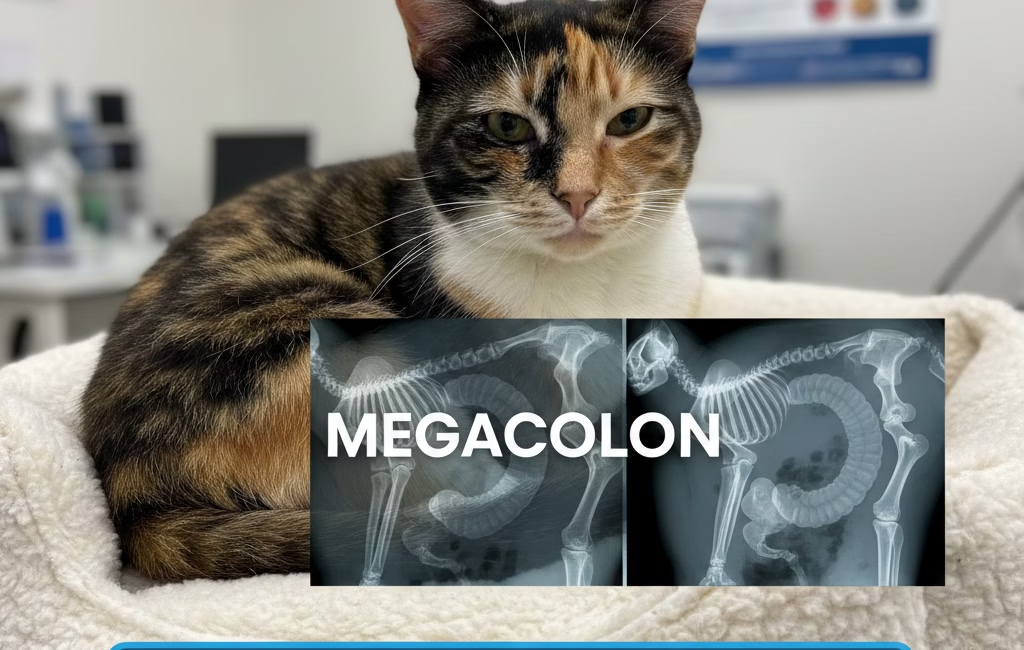
What Is Megacolon in Cats?
What is megacolon in cats? Man, if you’re googling that right now while your poor kitty keeps running to the litter box and coming out empty, I feel you. Hey, I’m Joshua Van, founder and senior editor at Healthy Pet. I’ve been in the cat world a long time talking to owners at 2 a.m. when their fur baby is miserable, swapping notes with vets over coffee, and reading every new study that drops. This one hits hard because it creeps up so quietly. One day your cat’s fine, next thing you know he’s straining like crazy with nothing to show for it. I’ve seen it turn happy, zoomy cats into sad little shadows, but the good news is we can catch it and fix it. Let’s walk through this together, no fancy vet-speak, just straight talk like we’re on the porch.
I dug into everything fresh as of right now in February 2026 the brand-new reviews, what the specialists are saying, real stories from folks just like you so you don’t have to guess anymore.
Key Takeaways
- Megacolon in cats is when the colon gets stretched out huge and floppy and basically quits pushing poop along.
- It mostly hits middle-aged boys, especially regular shorthairs, and a lot of the time there’s no obvious reason doctors call it idiopathic.
- You can often handle it at first with food switches and medicine, but if it keeps coming back, surgery usually turns things around for good.
- The earlier you spot it, the easier it is most cats end up living totally normal lives again, chasing toys and demanding dinner like nothing happened.
What Megacolon in Cats Actually Feels Like for Your Kitty (Way Worse Than Regular Constipation)
Think of the colon like a big muscle hose that’s supposed to wave and squeeze poop right out. With megacolon in cats, that hose gets blown up like an old party balloon sometimes three or four times bigger than normal and the muscles just stop working. Everything backs up, dries into hard lumps, and your cat is in real pain. Vets call the bad stage obstipation, and trust me, it’s as rough as it sounds.

This isn’t the random hairball backup we all deal with once in a while. This sticks around and gets worse. That new review in The Veterinary Journal from February 2026 spells it out feline megacolon is still one of the toughest gut problems showing up in clinics.
Why on Earth Does This Happen?
Here’s the part that drives everyone nuts: most cases are idiopathic, which just means “we don’t totally know why the muscles quit.” The nerves or the smooth muscle in the colon stop firing right. But other stuff can kick it off or make it snowball:
- Old broken pelvis from when they were outdoors and had a close call
- Nerve damage from spine injuries
- Getting dehydrated all the time because of kidney stuff
- Tumors, scars, or anything blocking the road out
- Sometimes certain meds or wonky electrolytes
Texas A&M put out a good piece back in 2024 reminding us that once the colon stretches too far, it’s like a rubber band that lost its bounce. The muscles give up and you’re in a loop that doesn’t stop without help.
Red Flags Your Cat Might Be Dealing With Feline Megacolon
Cats hide everything, but they still give you clues if you know what to watch:
- Going to the box over and over, pushing hard, maybe letting out a little yowl
- Only tiny hard pebbles or nothing at all for days
- That classic hunched-up “this hurts” stance
- Throwing up, ignoring food, acting wiped out or hiding in the closet
- A belly that feels tight or puffy when you pet it real gentle (don’t push let the vet check)
I heard from one emergency place last year that once cats quit even trying the box, you’re in the serious zone. If it’s been two days with no real poop and your guy seems off, call the vet. Don’t wait it out.
How They Figure It Out at the Clinic
Your vet usually starts by feeling that big packed colon right through the belly yeah, they can tell a lot just from that. Then the X-rays are the giveaway. If the colon looks way wider than the L5 bone in the spine (they measure the ratio, and anything over about 1.48 screams megacolon in cats), that’s it.
They’ll do bloodwork too to check for dehydration or kidney trouble. Sometimes an ultrasound, but most times the X-ray tells the whole story.
What Actually Helps: Starting Small and Going Big If We Have To
We always try the easy stuff first because nobody wants surgery if they don’t have to.
The Everyday Stuff That Works for a Lot of Cats Fluids under the skin or IV to get them hydrated fast. A warm enema if things are really stuck (done nice and gentle under sedation). Then lactulose or plain MiraLAX-type stuff every day to soften things without turning it to soup. Prokinetics like cisapride to give the colon a nudge. And the diet switch mostly wet food, maybe a spoonful of pumpkin, or whatever low-residue formula your vet picks so there’s less junk to move.
Plenty of cats do okay on this for a long time. I’ve had owners message me saying their cat went from hiding all day to batting toys around again once the pressure eased up.
The Surgery That Changes Everything: Subtotal Colectomy When the medicine stops cutting it (and with the idiopathic kind it often does after a while), they take out most of that lazy colon. Sounds intense, right? It is, but the results are pretty amazing for most cats.
The 2025 Polish review and the newest 2026 Veterinary Journal both say subtotal colectomy is still the way to go for tough cases. They try to leave the ileocecocolic junction if they can it helps keep stools from being too loose long-term. At first your cat might go more often and softer, but within six to twelve weeks most settle into two or three decent poops a day. About 90% of cats do great afterward, complications under 5%. One older study from 2021 that everyone still quotes showed long happy lives and owners who’d do it again in a heartbeat.
Getting Through Life After Megacolon in Cats
Doesn’t matter if you’re managing with meds or past the surgery the trick is staying ahead of it:
- Water everywhere fountains, tuna juice, wet food
- Clean boxes in quiet spots, more than one if you’ve got multiple cats
- Weigh your cat every week or two and keep those senior visits
- Never blow off even a little straining
Your buddy can still have a full, silly, normal cat life. I promise.
Little Things You Can Do Today to Lower the Odds
Start with mostly wet food if you haven’t already. Keep him at a good weight. Once he hits seven or eight, get those yearly blood checks. Pay attention to his usual poop schedule so you notice when it changes.
FAQs About Megacolon in Cats
Does megacolon in cats ever go away completely?
The idiopathic type doesn’t really “cure,” but you can manage it so well most people forget it was ever a problem. Surgery feels like a reset for a lot of cats.
How long can my cat live with this?
With treatment, tons of them live their whole normal lifespan. Without help it gets dangerous quick.
Is the surgery scary or worth it?
It’s big surgery, no doubt, but cats bounce back faster than you think. Most owners tell me their cat acts like a kitten again.
Can little kittens get feline megacolon?
It’s rare, but yeah sometimes it’s something they’re born with. Any straining in a baby needs the vet right away.
How do I know if it’s just normal constipation or real megacolon in cats?
Regular stuff clears up fast with one or two things. This keeps coming back, the colon stays huge on X-rays, and it gets worse.
Will my cat still use the litter box after surgery?
Oh yeah most of them use it way more happily once that pain is gone.
References
- Munif MR et al. “Megacolon in cats: Current insights and future directions.” The Veterinary Journal, February 2026
- Kowalczyk P et al. “Megacolon in cats: Review of the current state of knowledge.” Medycyna Weterynaryjna, 2025
- Merck Veterinary Manual – Megacolon in Cats (latest update)
- Texas A&M University – “Helping Your Cat Overcome ‘Megacolon’” (October 2024)
- VCA Animal Hospitals – Megacolon in Cats
- Cornell Feline Health Center – Ask Elizabeth on Idiopathic Megacolon
- Grossman RM et al. JAVMA 2021 – Outcomes after subtotal colectomy
- PetMD – Megacolon in Cats (updated reviews)


Understanding Fever in Cats
Canine Fitness Month: Ways to Work Out with Your Dog


No Comment! Be the first one.