

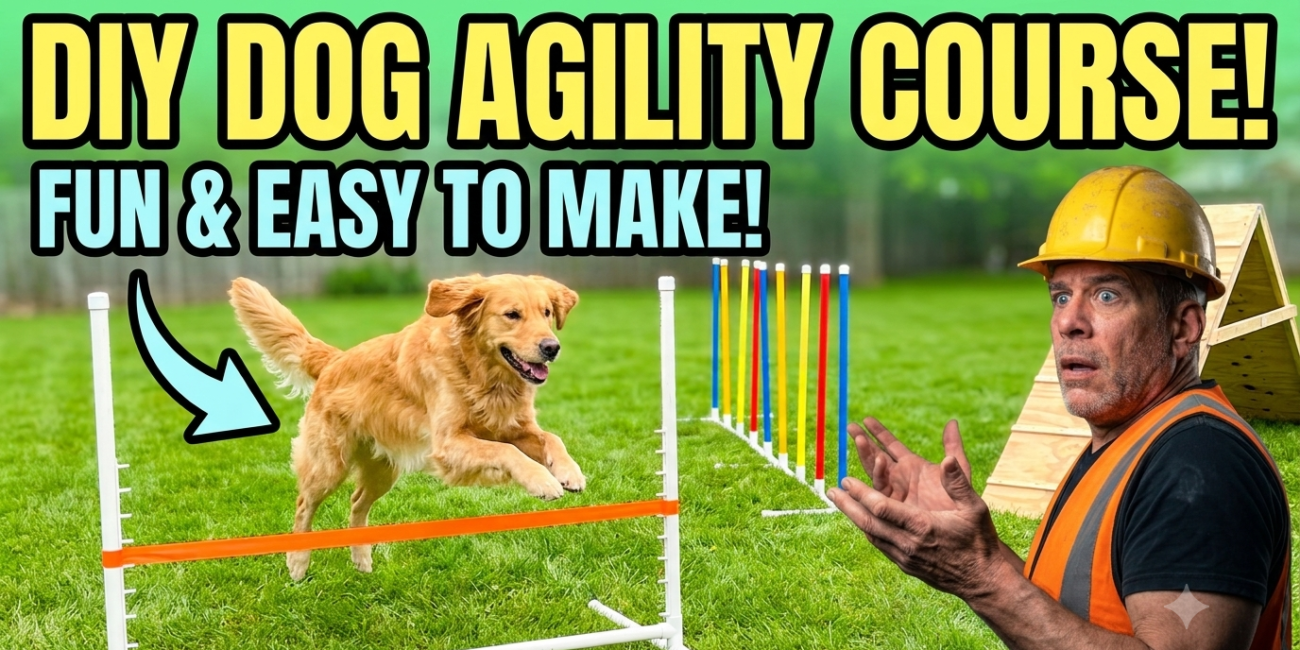
How to Make a Dog Agility Course (DIY)
Agility training isn't just for championship Border Collies competing on television. Whether you are looking to burn off high working-breed energy, enhance joint mobility, or supplement a structured canine fitness routine, setting up a backyard obstacle course provides incredible physical and mental stimulation for your dog.
Best of all, commercial agility equipment can cost hundreds of dollars, but you don't need a huge budget to get started. With a few basic hardware store supplies and everyday household items, you can construct a safe, fully functional DIY agility course in a single afternoon. In this 2026 step-by-step guide, we break down five essential obstacles you can easily build at home.
The DIY Agility Obstacle Matrix
Before gathering your materials, review the primary physical benefits and skill requirements for each core obstacle type.
| Obstacle Type | Core Skill Developed | Key DIY Materials | Safety Priority |
|---|---|---|---|
| Hurdle Jump | Hind-leg drive, plyometrics, timing. | 1" PVC pipes, PVC snap clamps or broomsticks + buckets. | Bar must knock off easily to prevent tripping. |
| Weave Poles | Spinal flexibility, core strength, focus. | PVC pipes with metal ground stakes, or plastic garden stakes. | |
| Pause Table | Impulse control, spatial awareness, "Stay". | Low wooden pallet, non-slip rubber mat or turf. | Must be completely stable with non-slick foot traction. |
| Tunnel | Confidence, navigating dark or blind spaces. | Collapsible pop-up tunnel or dining chairs + blankets. | Secure both ends so it doesn't roll during use. |

5 DIY Obstacles You Can Build in an Afternoon
The hurdle jump is the cornerstone of any agility course. To build a sturdy, adjustable jump, grab two 3-foot lengths of 1-inch PVC pipe for the vertical posts, T-connectors for base feet, and snap-on PVC clip fittings for the crossbar holders. Cut multiple clip notches at varying heights (e.g., 4", 8", 12", and 16") so you can adjust the bar based on your dog's size. Crucial safety rule: Never glue the crossbar into place. The horizontal bar must dislodge instantly if your dog's paws bump it during a leap.
Weave poles teach your dog body awareness and rhythmic movement. You can construct a set of six weave poles using 3-foot lengths of 3/4-inch PVC pipe. To anchor them into grass, insert heavy-duty metal screwdriver shanks or ground stakes into the lawn spaced 24 inches apart, then slide the PVC pipes directly over the stakes. If training indoors, connect the poles along a flat PVC base frame weighted down with sandbags.
The tire jump challenges your dog to target a specific spatial target rather than simply leaping over a bar. Buy a cheap plastic hula hoop from a toy store. Build a rectangular PVC frame slightly wider than the hoop, and suspend the hula hoop in the center using four heavy-duty bungee cords or thick elastic bands. The elastic suspension ensures that if your dog misjudges their leap, the hoop gives way without causing injury or panic.
In agility trials, the pause table requires the dog to leap onto a elevated platform, execute a designated "Down" or "Sit" command, and hold it for five seconds before moving on. You can repurpose an sturdy wooden pallet or build a low wooden box (around 8 to 12 inches high for safety). Cover the top surface completely with a heavy-duty rubber doormat or artificial turf secured with staple gun tacks to provide absolute slip resistance.
Tunnels build tremendous confidence by requiring dogs to sprint through enclosed spaces. While collapsible children's play tunnels or dog agility tunnels can be purchased affordably online, you can improvise a budget tunnel indoors using a row of dining room chairs covered with a heavy bedsheet or tarp. Ensure the blanket is clipped tightly to the chair frames so it doesn't collapse on top of your dog mid-run.
2. Traction is Non-Negotiable: Never set up an agility course on slick hardwoods, tile, or wet grass. Slipping at high speeds can lead to severe ACL/CCL tears or spinal trauma. Always build your course on dry turf, carpet, or non-slip rubber matting.
The Verdict: Play Hard, Train Smart
A home agility course is one of the most rewarding enrichment projects you can undertake with your dog. It strengthens your bond, sharpens obedience commands under distraction, and gives working breeds a constructive outlet for their natural energy. Keep sessions short (10–15 minutes), prioritize safety over jump height, and celebrate every successful obstacle with plenty of praise!
Looking to level up your dog's active lifestyle? Subscribe to the DiggityDog Newsletter today for weekly athletic conditioning routines, behavioral guides, and expert pet care tips delivered straight to your inbox!

J.V. CHARLES – DiggityDog
J.V. Charles is a pet care specialist and dedicated pet advocate. He founded DiggityDog to bridge the gap between complex veterinary science and practical, everyday advice that empowers pet parents to live happier, healthier lives with their furry companions.

Other Articles

5 Easy Ways to Care for Dogs with Sensitive Tummies
5 Ways To Calm Your Dog Before Going to the Groomer


No Comment! Be the first one.