

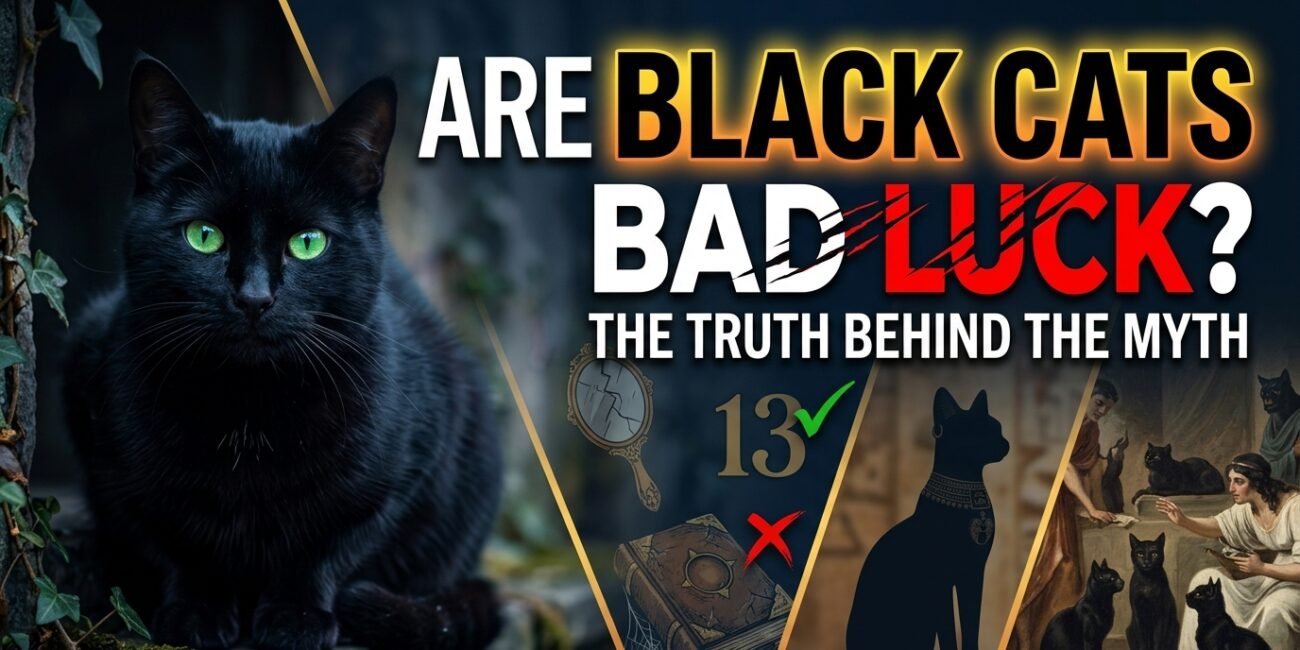
Are Black Cats Bad Luck? The Truth Behind the Myth
Whether you're reading a bedtime story to babu or walking past the seasonal aisle at the local store, the image of the spooky, unlucky black cat with an arched back is impossible to avoid. For centuries, these beautiful felines have been battling a serious PR problem, famously accused of bringing bad luck to anyone whose path they cross.
But how did a simple genetic trait—melanism, which gives them their sleek, dark coats—turn into a global superstition? It is time to debunk the myth, explore the fascinating folklore, and shine a light on why adopting a "mini panther" might actually be the best luck you'll ever have.

A Global Folklore Breakdown
The idea that black cats are unlucky is largely a Western European and American concept. In many other parts of the world, a black cat is actually considered a powerful omen of prosperity and good fortune.
| Region / Culture | The Superstition | The Verdict |
|---|---|---|
| Medieval Europe | Pope Gregory IX issued a papal document in 1233 linking black cats to witchcraft and dark magic. This sparked centuries of fear. | ❌ Bad Luck |
| Japan | Owning a black cat, or having one cross your path, is believed to bring good fortune. They are especially thought to help single women attract good suitors. | ✅ Good Luck |
| Scotland | If a black cat arrives on your doorstep or porch, it is a sign of impending wealth and household prosperity. | ✅ Good Luck |
| Nautical / Sailors | Sailors historically kept black cats on ships. Not only did they hunt mice, but their presence was believed to ensure a safe voyage home. | ✅ Good Luck |
3 Realities of the Modern Black Cat
The superstitions of the past still have a tragic impact today. In animal shelters, "Black Cat Syndrome" is a well-documented phenomenon where black cats (and dogs) take significantly longer to get adopted and face higher euthanasia rates than their lighter-colored peers. When you adopt a black cat, you are truly saving an underdog.
The genetic mutation that causes a cat's coat to be solid black (melanism) is actually linked to a stronger immune system. Research suggests that the same genes offering that dark coloration may also provide black cats with higher resistance to certain feline diseases, including feline immunodeficiency virus (FIV).
If you've ever interacted with a sleek, solid black cat that acts more like a golden retriever, you might have met a Bombay. Bred specifically to look like wild Indian black panthers, Bombays are famous for their deeply affectionate, outgoing, and dog-like personalities.
The Verdict: Pure Good Fortune
Black cats are not harboring dark magic, nor are they plotting to ruin your day by crossing the street. They are simply beautiful, loving animals carrying the heavy baggage of a 13th-century myth. The next time a black cat crosses your path, consider yourself lucky—you just got to see a mini panther in action.
Want more myth-busting veterinary insights? Subscribe to the DiggityDog Newsletter for our latest behavioral deep-dives, pet wellness tips, and rescue advocacy guides!

J.V. CHARLES – DiggityDog
J.V. Charles is a pet care specialist and dedicated pet advocate. He founded DiggityDog to bridge the gap between complex veterinary science and practical, everyday advice that empowers pet parents to live happier, healthier lives with their furry companions.

Other Articles
Indoor Exercise for Dogs



No Comment! Be the first one.