

How to Groom a Cat at Home: The Complete Step-by-Step Guide
Managing a busy home often feels like a delicate juggling act. On any given afternoon, while trying to ensure babu is settled in for a peaceful nap, the last thing you want to deal with is a flurry of flying cat hair, sharp claws snagging on the rug, or a sudden hairball disaster across the living room carpet. For many pet parents, home grooming feels daunting—an intimidating battle of wills involving unsheathed claws, high-pitched vocalizations, and relentless squirming.
However, learning how to properly groom your cat at home is one of the single best investments you can make for their health, comfort, and longevity. While felines are famous for being fastidious self-groomers—spending up to 50% of their waking hours licking their fur—they cannot do it all alone. Domestic environments, aging joints, dense undercoats, and dietary shifts mean that your cat genuinely relies on your assistance to maintain optimal skin, coat, claw, and ear health. This comprehensive guide breaks down the process into stress-free, bite-sized steps so you can transform grooming time into a bonding session rather than a battle.
The Grooming Tool Matrix
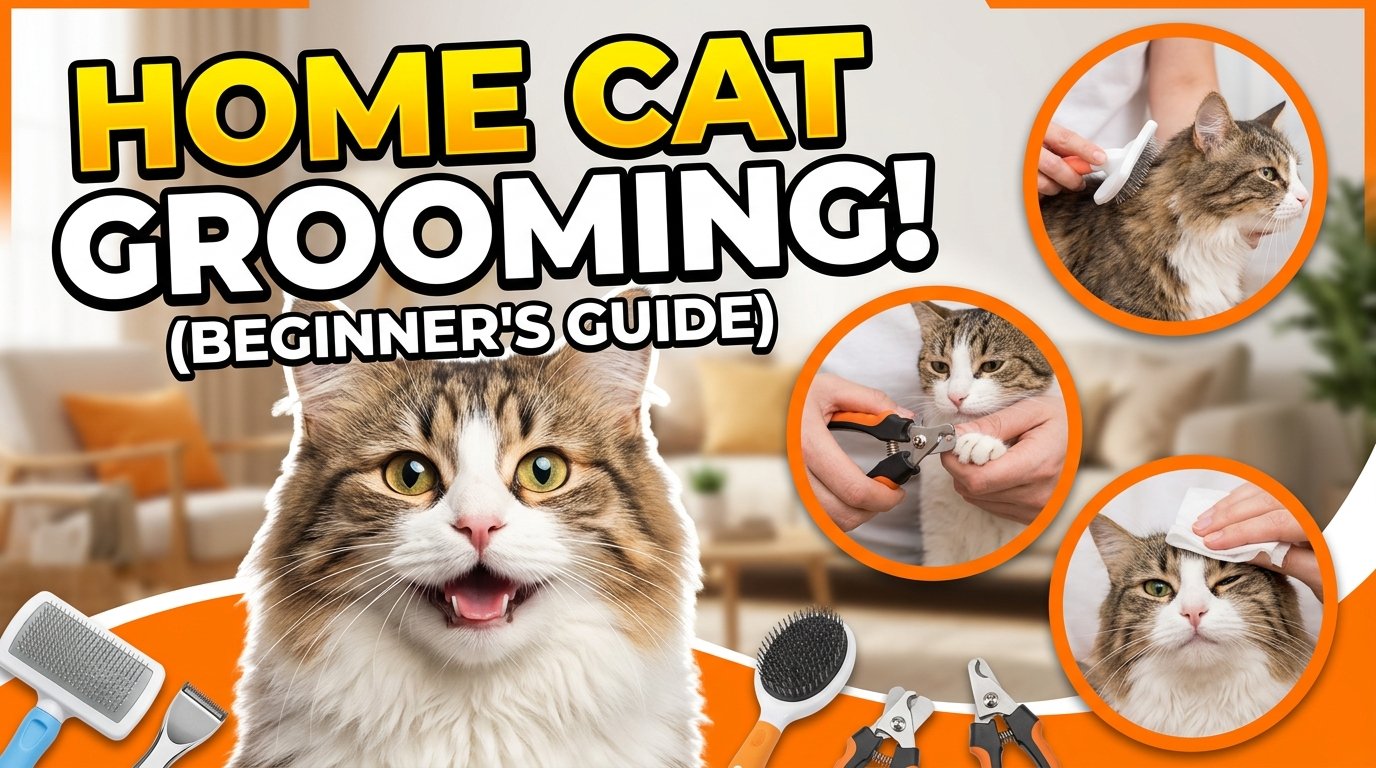
Before touching your cat, assemble the proper equipment. Using human hairbrushes or cheap, harsh tools can scrape their sensitive skin, instantly creating negative associations that make future sessions twice as difficult.
| Grooming Tool | Best Used For | Primary Benefit |
|---|---|---|
| Slicker Brush | Medium to Long-Haired Breeds | Removes loose undercoat fur, breaks up micro-tangles, and prevents severe mats from forming. |
| Rubber Curry Brush / Grooming Glove | Short-Haired Breeds | Gently massages skin while trapping dead surface hairs through static traction. Excellent for anxious cats. |
| Stainless Steel Greyhound Comb | All Coat Types (Finishing) | Detects hidden mats near the skin surface and verifies that the undercoat is completely tangle-free. |
| Guillotine / Scissor Nail Trimmers | Claw Maintenance | Provides clean, sharp cuts without splitting or crushing the delicate claw shell. |
| Veterinary Ear Cleaning Solution | Ear Hygiene | Dissolves excess wax buildup and prevents yeast or bacterial proliferation inside the ear canal. |
Pillar 1: Master the Coat & Undercoat Routine
Brushing is the core foundation of feline grooming. Beyond making their coat look sleek and glossy, routine brushing removes shed hair before your cat ingests it during self-cleaning. This drastically lowers the incidence of chronic hairballs, gastric blockages, and regurgitation.
For short-haired cats, a thorough 5-to-10-minute session twice a week is usually sufficient. For long-haired breeds (such as Persians, Maine Coons, or Ragdolls), daily brushing is vital to prevent painful matting. Always brush in the natural direction of hair growth. Start at the shoulders and move smoothly toward the tail, paying special attention to friction-prone areas like the armpits, lower belly, and behind the ears.
If you encounter a mat, never grab a pair of scissors to cut it out. A cat’s skin is paper-thin and easily pulls up into the base of the mat, leading to severe accidental lacerations that require emergency sutures. Instead, isolate the mat with your fingers at the skin level to protect their tissue. Use a slicker brush or a wide-toothed comb to gently pick at the outer edges of the knot, slowly working it loose from the tip down to the base.
Pillar 2: Stress-Free Claw Trimming
Overgrown claws can curve around and painfully pierce your cat's paw pads, leading to severe infections and movement issues. Regular trims every 2 to 3 weeks keep their paws healthy and protect your furniture, carpets, and skin from accidental scratches.
The secret to successful claw trimming is desensitization. Practice touching your cat’s paws when they are relaxed or sleeping, rewarding them with high-value treats without bringing out the clippers. When trimming, gently press the top and bottom of the toe pad to extend the claw.
Pillar 3: Ears, Eyes & Facial Maintenance
Facial care is frequently overlooked, yet it plays a massive role in overall comfort. Check your cat's ears weekly. A healthy ear interior should be light pink, clean, and completely odorless. If you notice a light wax buildup, squirt a few drops of veterinarian-approved ear cleaner onto a cotton pad (never a Q-tip, which can puncture the eardrum) and gently wipe the visible folds of the ear flap.
For tear staining or eye discharge—common in flat-faced breeds—use a warm, damp microfiber cloth to gently wipe from the inner corner of the eye outward. Use a fresh section of the cloth for each eye to prevent cross-contaminating potential infections.
Pillar 4: Low-Stress Bathing (When Absolutely Necessary)
Cats rarely need full baths because of their diligent self-grooming habits. However, if your cat gets into sticky substances, toxins, or suffers a severe bathroom mishap, a bath becomes unavoidable. To prevent panic, place a rubber bath mat or folded towel at the bottom of the sink or tub; cats freak out when they lose traction on slippery porcelain. Fill the basin with a few inches of lukewarm water before bringing the cat into the room—the sound of running tap water heavily escalates anxiety. Use only cat-formulated shampoos, avoid getting water near their eyes and ears, and thoroughly towel-dry them immediately in a warm room.
The Verdict: Consistency Over Intensity
Grooming your cat at home shouldn't be a chaotic, high-stress ordeal. By investing in the right tools, moving at your cat's pace, and relying on positive reinforcement, you safeguard their physical health while building a deeper bond. Keep sessions short, remain patient, and enjoy the reward of a happy, healthy, purring companion.
Want to elevate your pet care routine? Subscribe to the DiggityDog Newsletter for expert veterinary insights, holistic wellness guides, and practical care tips delivered straight to your inbox!

J.V. CHARLES – DiggityDog
J.V. Charles is a pet care specialist and dedicated pet advocate. He founded DiggityDog to bridge the gap between complex veterinary science and practical, everyday advice that empowers pet parents to live happier, healthier lives with their furry companions.

Other Articles
How to Travel with a Cat: A Stress-Free Guide





No Comment! Be the first one.