

African Clawed Frogs: Species Profile
Hey there, fellow pet enthusiasts! If you’ve ever wondered about adding a quirky, fully aquatic companion to your home, this African Clawed Frogs: Species Profile is exactly what you need. As the founder and senior editor of Healthy Pet Care, Joshua Van here, and I’ve spent years diving deep into the world of exotic pets. Today, I’m thrilled to share my insights on these fascinating creatures that have captured the hearts of aquarium lovers everywhere.
In this African Clawed Frogs: Species Profile, we’ll cover everything from their wild origins to daily frog care tips that keep them thriving. Whether you’re a newbie or a seasoned hobbyist, stick around these aquatic pets are more than just tank dwellers; they’re lively characters with personalities that’ll surprise you.
Key Takeaways
- African Clawed Frogs (scientifically known as Xenopus laevis) are hardy, long-lived aquatic pets that can thrive for 15-20 years or more with proper frog care.
- A minimum 10-gallon tank is essential, but bigger is better for these active swimmers who need plenty of space and hiding spots.
- Their diet should be varied and carnivorous, focusing on high-quality pellets, worms, and small fish to maintain optimal health.
- Regular water changes and monitoring are crucial to prevent common issues like bacterial infections in these sensitive amphibians.
- As pets, they’re low-maintenance watchers rather than handlers perfect for those who enjoy observing rather than cuddling.
What Are African Clawed Frogs?
Let’s kick things off with the basics. African Clawed Frogs aren’t your typical backyard hoppers; they’re fully aquatic amphibians hailing from the ponds and rivers of Sub-Saharan Africa. Native to regions like South Africa and Namibia, these guys Xenopus laevis have adapted to life underwater, making them standout aquatic pets for home setups.

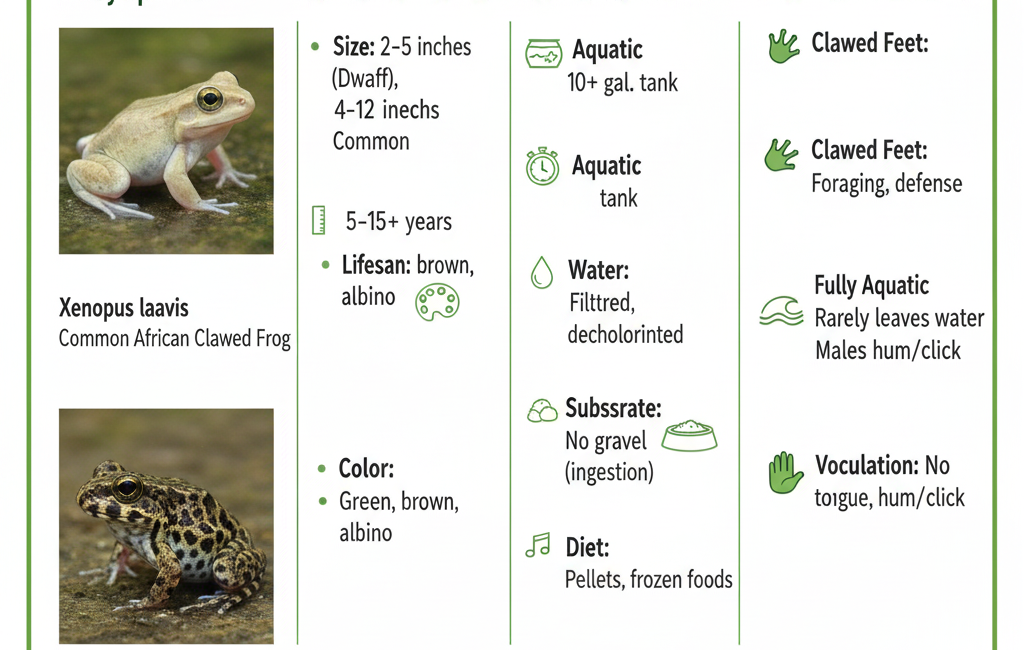
I remember the first time I encountered one at a local exotic pet expo back in 2023; its webbed feet and curious claws immediately hooked me. These frogs get their name from the three sharp claws on each hind foot, which they use to shred food or dig into the substrate. Males typically grow to 2-4 inches, while females can reach up to 5-6 inches, and they come in shades of olive green, brown, or even albino variants.
What makes them so appealing as pets? Their resilience. With the right frog care, they can live well into their twenties, outlasting many fish or small mammals. But heads up: in some U.S. states like California, they’re considered invasive, so always check local regs before bringing one home.
Origins and Natural Habitat
In the wild, African Clawed Frogs thrive in warm, stagnant waters think slow-moving streams or ponds with temperatures between 60-80°F. They’re opportunistic predators, munching on anything from insects to small fish. This natural behavior translates directly to pet life, where replicating that environment is key to healthy frog care.
Fun fact: These frogs played a huge role in science history. Back in the mid-20th century, they were used in pregnancy tests because females lay eggs when injected with certain hormones. Crazy, right? But today, we’re all about ethical pet care, focusing on their well-being as companions.
Setting Up the Perfect Habitat for Your Frog
Alright, let’s talk tank life the cornerstone of African Clawed Frog pet care. These aren’t land-lovers; they spend their entire lives submerged, so no need for a fancy half-water, half-land setup like with some amphibians.
Start with the tank size: For a single frog, go for at least a 10-gallon aquarium, but I always recommend 20 gallons or more if you can swing it. More space means less stress and healthier frogs. Water depth should be 7-12 inches to give them room to swim and explore without feeling cramped.
Tank Essentials and Substrate
Line the bottom with fine sand or smooth gravel nothing too small that they might accidentally swallow during feeding frenzies. Add plenty of hiding spots: rocks, driftwood, PVC pipes, or even silk plants work wonders. Live plants like Java fern can add oxygen and aesthetics, but these frogs might uproot them in their enthusiasm.
Filtration is a must, but keep it gentle African Clawed Frogs prefer low to moderate water flow. A sponge filter does the trick without creating a whirlpool. And don’t forget a secure lid! These escape artists can launch themselves out of the water like mini rockets.
Water Quality and Temperature
Water is their world, so quality is non-negotiable in healthy pet routines. Use dechlorinated tap water (let it sit or use a conditioner), and maintain a pH of 6.5-7.5. Temperature-wise, aim for 68-75°F; no heater needed if your room stays comfy, but always monitor with a reliable thermometer.
Change 20-30% of the water weekly to keep ammonia and nitrates low. From my experience, skipping this step is the fastest way to health woes trust me, I’ve learned the hard way with early setups.
Feeding Your African Clawed Frog
Feeding time is where the fun really starts! African Clawed Frogs are carnivores through and through, with voracious appetites that match their predatory nature.
A staple diet should include floating amphibian pellets designed specifically for Xenopus laevis brands like Zoo Med or Hikari are solid choices as of 2026. Supplement with live or frozen treats: earthworms, bloodworms, brine shrimp, or even small feeder fish like guppies. Adults eat every 2-3 days; juveniles need daily meals until they’re about 2 inches long.
Portion control is key offer what they can eat in 10 minutes to avoid obesity. I’ve seen frogs balloon up from overfeeding, and it’s not pretty. No need for vitamins if the diet’s balanced, but if you’re unsure, consult a vet specializing in exotics.
Health and Common Issues
Keeping your African Clawed Frog healthy boils down to prevention. Poor water quality is enemy number one, leading to bacterial infections like red-leg disease (look for reddened skin or lethargy) or fungal growths.
Other watch-outs: Bloat from overeating or parasites, cloudy eyes from infections, or skin sores. If something seems off, quarantine and seek a herp vet pronto antibiotics might be needed. As of the latest 2025 updates from sources like The Spruce Pets, regular testing kits for ammonia and pH are game-changers for early detection.
Pro tip from years in the field: Quarantine new frogs for a month to avoid introducing nasties to your tank.
Behavior and Handling Tips
Don’t expect cuddles here African Clawed Frogs are observers’ delights. They’re active swimmers, often seen “standing” on their hind legs or burrowing into substrate. Males might croak during breeding season, adding a quirky soundtrack to your aquarium.
Handling? Minimize it. Their skin is slippery and sensitive; plus, they can scratch with those claws. If you must move them, use a net or wet hands. Stress shows as excessive hiding or loss of appetite, so provide a calm, vibration-free spot.
As aquatic pets, they’re great for kids learning responsibility, but supervision is a must to ensure healthy pet practices.
Breeding Your African Clawed Frogs
If you’re feeling adventurous, breeding African Clawed Frogs is straightforward. They mature around 10-12 months, and mating can happen year-round in captivity, though it’s more common in warmer months.
Simulate rain by lowering then raising water levels, or use hormone injections from a vet (ethically, of course). Females lay hundreds of eggs, which hatch into tadpoles needing their own setup. But beware: Overpopulation is real, so plan ahead or avoid breeding altogether.
From my editorial desk, I’ve covered stories of hobbyists turning this into a passion project just ensure you’re ready for the tadpole takeover!
FAQs
How long do African Clawed Frogs live?
With top-notch frog care, African Clawed Frogs can live 15-20 years or longer. Some reports from 2025 even note specimens hitting 30!
Can African Clawed Frogs live with fish?
Sometimes, but they’re predators. Small fish might become snacks, so pair with larger, fast-swimming tank mates if at all.
Are African Clawed Frogs easy to care for?
Absolutely, for beginners focused on water quality. They’re hardy but require consistent pet care routines.
What’s the difference between African Clawed and Dwarf Frogs?
African Clawed Frogs are larger with claws on hind feet only, while dwarfs have them on all feet and stay smaller (1-2 inches).
Do they need special lighting?
Nope a standard 12-hour day-night cycle with indirect light suffices for these aquatic pets.
References
- Pete’s Aquatics. “Care, Breeding, and Feeding for the African Clawed Frog.” Accessed January 2026.
- The Spruce Pets. A Guide to Caring for African Clawed Frogs as Pets.” Updated October 10, 2025.
- National Zoo. “African Clawed Frog.” Smithsonian’s National Zoo & Conservation Biology Institute. Accessed January 2026.
- FishLore Aquarium Forum. “Care Sheet For African Clawed Frogs.” Published September 21, 2010, with community updates through 2025.


How to Care for a Pet Winter White Dwarf Hamster
Why Do Dogs Eat Grass?





No Comment! Be the first one.