

Reading time: 19 minutes
Updated: March 26, 2026
Best Food for Maine Coon Cats in America: Complete 2026 Nutrition Guide
Maine Coon cats are the gentle giants of the feline world — often weighing 15–25 pounds, with long, luxurious coats and big, tufted ears. Because of their impressive size and genetic predispositions (including hypertrophic cardiomyopathy, hip dysplasia, and spinal issues), they need a diet that is higher in protein, supports joint health, promotes heart function, and provides plenty of moisture to protect their kidneys.
Feeding a Maine Coon isn’t the same as feeding an average house cat. The right food can mean the difference between a healthy, active 15–18 year lifespan and early joint problems or heart issues. In this complete 2026 guide we review the best cat foods for Maine Coons available in America, explain exactly what these big cats need nutritionally, compare wet vs dry options, and give practical feeding tips so your Maine Coon stays strong, shiny, and happy for years to come.
Why Maine Coons Need Special Nutrition
Maine Coons grow larger and longer than most breeds, which puts extra stress on their joints and heart. They also tend to be prone to:
- Hypertrophic cardiomyopathy (HCM) — the leading cause of heart disease in the breed
- Hip and spinal problems due to their size
- Urinary and kidney issues if they don’t get enough moisture
- Obesity if overfed or given low-quality kibble
A proper diet for a Maine Coon should be:
- High in animal-based protein (minimum 35–40% on a dry-matter basis)
- Moderate in fat with added omega-3s for joint and heart health
- Low-to-moderate in phosphorus to support kidneys
- High in moisture (wet food or wet/dry mix is ideal)
- Rich in taurine, L-carnitine, and antioxidants
Key Nutritional Needs for Maine Coon Cats
Maine Coons need plenty of meat-based protein to maintain their impressive muscle mass. Look for named meats (chicken, turkey, salmon, beef) as the first 2–3 ingredients.
2. Joint SupportGlucosamine, chondroitin, and omega-3 fatty acids (EPA/DHA) help protect those big bones and hips.
3. Heart Health SupportTaurine and L-carnitine are essential. Many premium formulas now include these specifically for large-breed cats.
4. High Moisture ContentLarge cats drink less relative to their size, so wet food or a wet/dry mix is strongly recommended to prevent urinary crystals and kidney strain.
5. Controlled CaloriesBecause they’re big, it’s easy to overfeed. Choose formulas designed for large-breed or indoor cats if your Coon is less active.
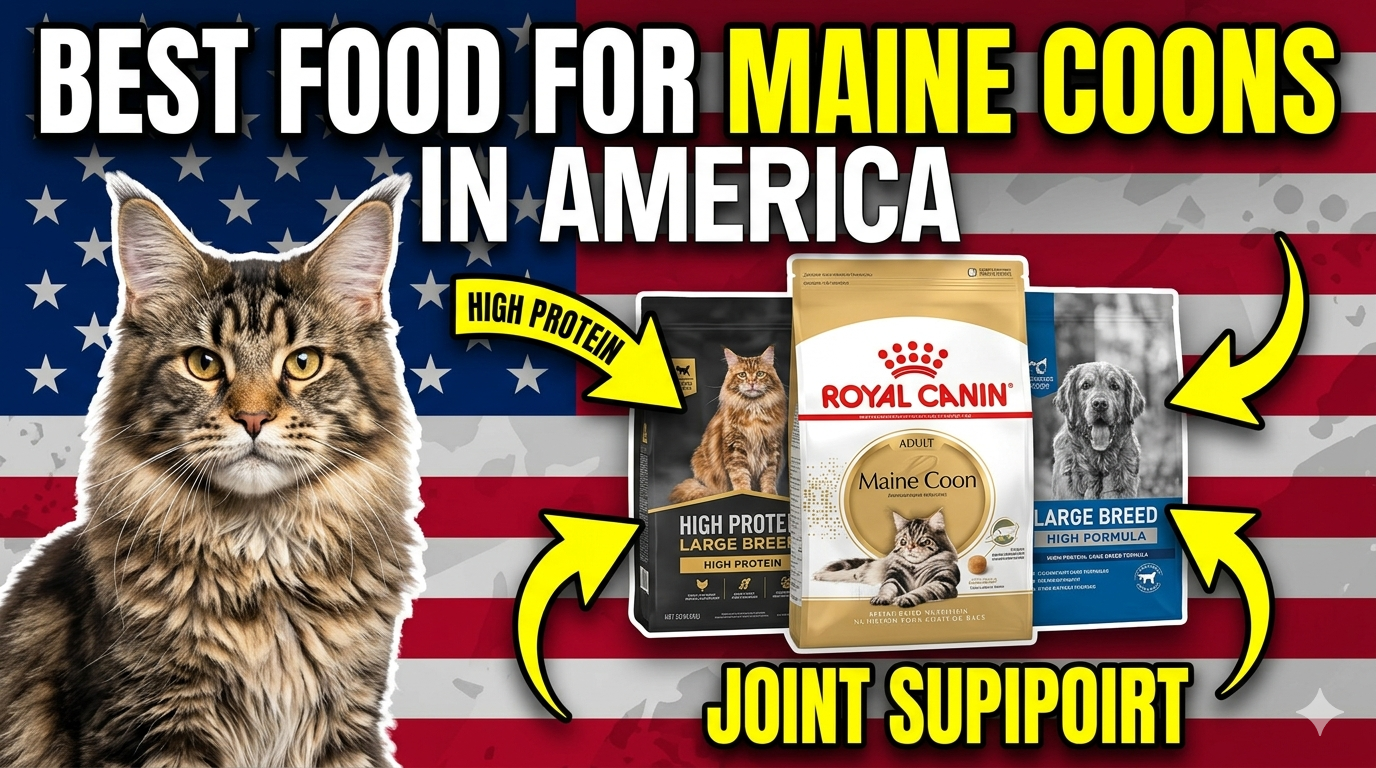
Best Foods for Maine Coon Cats in America (2026)
Specifically formulated for Maine Coons with larger kibble size, joint support, and heart-healthy nutrients. ~$35–$45 for 15 lb bag (worth every penny).
Excellent for larger cats with controlled calories and added joint support. Wet versions available for extra moisture.
High protein, added omega-3s, and probiotics. The LiveClear formula even helps reduce allergens in the home — a bonus for big shedders.
Grain-free, high-protein option with glucosamine and chondroitin. Great for active Maine Coons.
High protein, grain-free, with added taurine and joint support. Excellent wet food options too.
Premium, biologically appropriate formulas with 85%+ animal ingredients. Higher price but outstanding quality for Maine Coons.
Wet vs Dry Food for Maine Coons
Wet food is strongly recommended for Maine Coons because it provides 70–80% moisture, which supports kidney health and helps prevent urinary issues common in large males. Many owners feed 70% wet + 30% dry for the perfect balance of hydration and dental benefits.
Dry kibble is convenient and helps keep teeth cleaner, but choose larger kibble sizes (Royal Canin Maine Coon kibble is specially shaped for big jaws) and always pair it with plenty of wet food or water fountains.
How Much Should You Feed a Maine Coon?
A typical adult Maine Coon (15–20 lbs) needs 300–500 calories per day depending on activity level. Follow the package guidelines but adjust based on body condition:
- Underweight: increase portions slightly and add wet food toppers
- Ideal weight: maintain and monitor every 2 weeks
- Overweight: switch to a weight-management formula and reduce treats
Split meals into 3–4 smaller feedings to prevent vomiting and mimic natural hunting behavior.
Transitioning to New Food & Common Mistakes to Avoid
Change food gradually over 7–10 days to avoid digestive upset. Warm wet food slightly to increase aroma for picky Coons.
Common mistakes:
- Feeding only dry kibble — not enough moisture
- Free-feeding high-calorie food — leads to obesity
- Ignoring taurine and joint support — critical for this breed
- Switching too quickly — causes diarrhea or refusal to eat
Give Your Maine Coon the Best Nutrition Possible
Maine Coons are big, beautiful, and full of personality — they deserve food that matches their size and special needs. Whether you choose a breed-specific formula like Royal Canin Maine Coon, a high-protein option like Wellness CORE, or a premium wet food from Purina Pro Plan or Blue Buffalo, focus on high animal protein, joint support, heart-healthy nutrients, and plenty of moisture.
Your Maine Coon will reward you with a luxurious coat, strong muscles, playful energy, and many more years of head bumps and lap time. The right food really does make a difference for these gentle giants.
Want weekly Maine Coon care tips, breed-specific feeding guides, and more practical advice for happy, healthy big cats? Join the DiggityDog newsletter free — no spam, just purr-fect advice delivered straight to you.
About the Author

J.V. CHARLES – DiggityDog
Cat and dog nutrition enthusiast and founder of DiggityDog. Passionate about helping pet parents choose the best food for their special breeds — especially the big, beautiful Maine Coons that steal our hearts.

Other Articles
Best Affordable Cat Food in America Under $30
No Comment! Be the first one.