

Black Palm Cockatoo (Goliath Cockatoo): Bird Species Profile
Hey everyone, if you’re on the hunt for an epic bird buddy, this Black Palm Cockatoo (Goliath Cockatoo): Bird Species Profile is just the ticket. I’m Joshua Van, the guy who started and runs Van’s Pet Insights as senior editor, and I’ve been knee-deep in pet care for what feels like forever – think rescuing strays and sharing tricks to keep your healthy pet thriving. Man, there’s nothing like the kick you get from hanging with a Goliath Cockatoo, but let’s break it all down with the freshest 2026 updates so you know if this feisty flier is your match.
Think about it: a big ol’ parrot wrapped in inky black feathers, rocking a spiky crest like it’s ready for a concert, and cheeks that glow red when it’s jazzed up. Yep, that’s the Black Palm Cockatoo a real head-turner in the wild or cozied up at home. Pulling from recent chats with experts and my own bird-wrangling tales, this rundown hits the highlights to see if one’s right for you.
Key Takeaways
- These guys are monster-sized for cockatoos, hitting 24 inches long and over 2 pounds no way they’re squeezing into a small spot!
- Crazy clever and all about company, they crave games and chats; ignore that, and you could end up with a feather-puller on your hands.
- Diet’s everything for a healthy pet stick to pellets, fresh fruits and veggies, and easy on the nuts to skip liver drama.
- Conservation heads-up: Their wild spots are shrinking quick, so if you’re buying, make sure it’s from good folks.
- Not newbie-friendly that huge beak and possible 90-year run means you’re in for the long haul with pet care.
What They Look Like Up Close
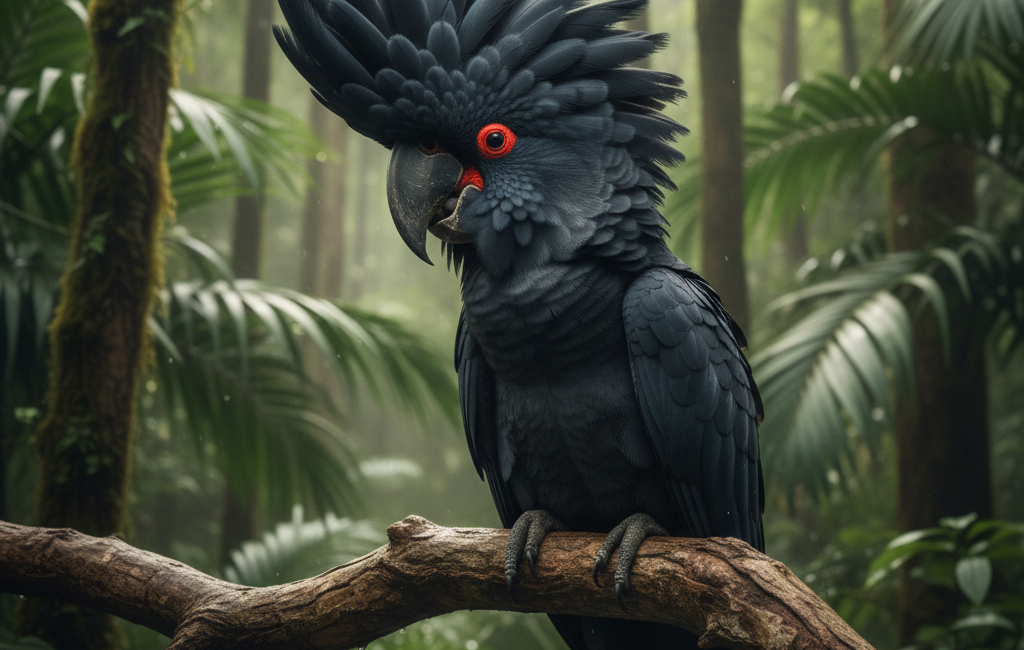
Okay, these birds are straight-up giants among parrots. They stretch from 22 to 24 inches, wings flaring out to almost 40 inches. The males pack more punch, weighing 500 to 1100 grams with beefier heads and beaks built for busting open nuts like it’s nothing.
Feathers-wise, it’s this deep black with a kinda dusty shine that gives a cool, shadowy look. The crest? Total show-off it stands tall when they’re pumped or on edge. And the cheeks turning from pinkish to bold red? That’s their way of spilling how they feel or if they’re under the weather. In all my pet care messing around, those shifts have clued me in big time on a bird’s vibe.
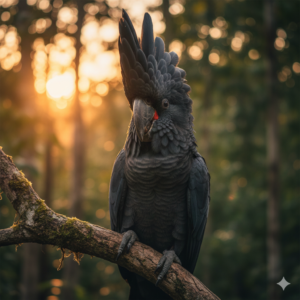
A couple subspecies out there, like the hulking Goliath from New Guinea or the regular-sized one. Doesn’t matter which, they’re tough cookies with feet that grab hold like vices, perfect for branches or perching on you.
Where They Hang Out and How They Act Wild
In the wild, Black Palm Cockatoos are bosses in the steamy forests of New Guinea, those Aru Islands, and Australia’s Cape York tip. They like it low-key, under 4,400 feet, crashing in tree holes near thick woods full of snacks. That’s prime real estate for gobbling seeds, fruits, and nuts.
Behavior? They’re pack animals sticking with a mate or a little group, fluffing each other up, and teaming for meals. The boys drum on trees with sticks to flirt or say “this is mine,” like nature’s rock band. Gutsy as heck, they’ll swipe from feeders or snag treats from people if food’s tight.
Sad part is, they don’t breed fast one egg maybe every few years, and lots get nabbed by predators. By 2026, mining and fires are wrecking their pads, with Aussie numbers dipping below 3,000. I’ve followed these heartbreaker stories for years, and it always drives home why nailing the wild basics is key to killer pet care.
Are They Pet Material? Let’s Be Real
Real talk: These aren’t your easy-peasy pets; they’re high-drama types needing room to roam like a full aviary, say 10 by 6 by 6 feet at minimum, not some pokey cage. From editing a ton of pet care stuff, I know they’re for pros who can give the hours.
Personality’s a trip super sharp, copying sounds, figuring out toys, even using stuff like tools. Get social early, and they’re your ride-or-die; drop the ball, and they might get grumpy or snappy. Careful with that beak; it’s a destroyer that chews wood or, yikes, fingers if you’re sloppy. Noise? Their squawks and words boom, so apartments? Nah.
What I’ve learned: Hang out every day to keep a healthy pet. No fun means fits like non-stop yells or picking at themselves. Grab toys, puzzles, and playtime. If you commit, the friendship’s gold they can hang for 40 to 90 years, outlasting a lot of stuff in life!
Feeding Them Right for Top Shape
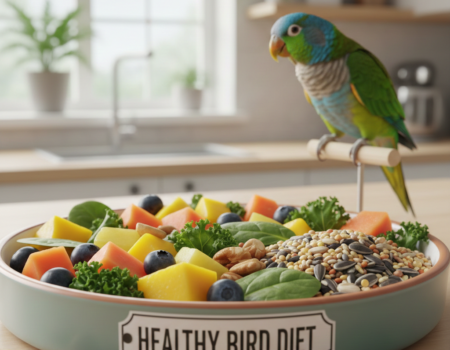
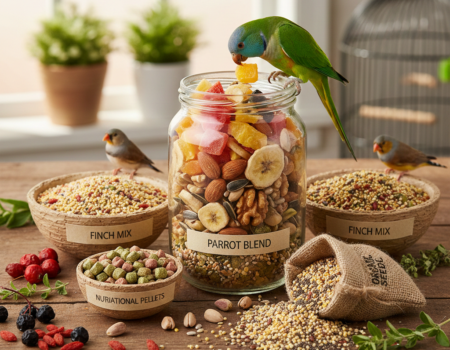
Getting food spot-on is huge in pet care for these fellas. Out there, they chow on palm bits, hard nuts, and tree bark first thing. At your place? Balance it: Half to three-quarters good pellets like Harrison’s for nutrients, a chunk of fresh stuff like apples or greens, and just a handful of nuts for treats.
Watch the fats they pile on easy, leading to liver junk or chubbiness. Skip seed-only vibes; that’s like eating candy and missing vitamins, say goodbye to A levels. Add calcium, specially for girls to dodge egg jams. Water fresh daily, switch up the eats to keep it interesting that’s how you get a zippy healthy pet.
Health Hiccups and How to Sidestep
Birds aren’t invincible, and Goliaths have their aches. Common stuff: Beaks growing wild needing trims, infections sneaking in, or bad eats causing low energy from anemia or whatever. They catch that beak-feather bug, heart issues from greasy food, and wheezy breaths.
Cheeks give clues off colors scream “vet now.” I’ve seen check-ups turn things around so many times. For smart pet care, clean their space weekly, keep newbies separate, watch for slumps or odd breaths. Handle it well, and they’ll be kicking for decades.
Getting Them Trained, Social, and Stimulated
Training’s like guiding a whiz kid fun but work. Start with goodies for basics like stepping up or chatting. Quick studies, but stubborn streaks, so stay chill. For mingling, hit with people, sounds, and touches young to cut fears.
The real deal for a healthy pet is fun stuff. Give chews, branches, games to scratch that drum itch. Change up to fight boredom stories I could tell of bored birds going nuts. Let out daily for bonds; just watch so they don’t trash your pad.
The Conservation Angle and Doing It Ethically
Bums me out, but these birds are in rough shape. Worldwide, IUCN calls Near Threatened, Aussies Vulnerable, with talks of Endangered as pops might crash 50% in 50 years. Blame mines ripping land, fires, storms, and pet traps.
Pet-wise, do right: Get from solid breeders with CITES papers, no wild ones. Chip in to groups like World Parrot Trust keeps the drummers drumming for tomorrow.
FAQs
What’s the price tag on a Black Palm Cockatoo?
Around 15 to 25 grand for a raised-right baby, plus bills for food, vets, space. It’s a splurge!
Do they chat a lot?
Decent at mimics, but not super talkers like Greys. With practice, they’ll toss words and noises that make you smile.
How long do Goliath Cockatoos live?
40-60 wild, up to 90 with ace pet care. Prep for a lifetime pal.
Mix well with other birds?
Maybe, but size makes pushy. Go slow, keep eyes on for no fights.
Why the cheek color swaps?
Their mood ring redder for excitement or worry. Pale? Could be sick, get checking.
References
- The Spruce Pets: Black Palm Cockatoo Profile (2025)
- Wikipedia: Palm Cockatoo (Updated 2026)
- Animal Diversity Web: Probosciger aterrimus (2026)
- Animalia.bio: Palm Cockatoo Facts (2026)
- World Parrot Trust: Palm Cockatoo Research (2026)
- IUCN Red List: Probosciger aterrimus (2026)
- PetPlace: Choosing a Palm Cockatoo (2026)
- VCA Hospitals: Feeding Pet Cockatoos (2026)

Other Articles

Fluffy Dog Breeds: Low-Shedding Options for Allergy-Friendly Homes
8 Best Trainable Pet Bird Species
No Comment! Be the first one.