

How Often Do Dogs Need Bathroom Breaks?
Hey everyone, ever find yourself watching your dog and thinking, “how often do dogs need bathroom breaks?” It’s a common head-scratcher for us pet folks. I’m Joshua Van, founder and senior editor over at Diggity Dog, and I’ve dealt with this plenty in my own home and through chatting with tons of dog owners. We’ll get into the details here, pulling from what I’ve seen firsthand and the newest tips floating around as of early 2026.
Diggity Dog is my spot for sharing real-talk pet care, and figuring out a good puppy potty schedule or daily routine can really smooth things out. I’ve had dogs of all kinds, from energetic little ones to chill older guys, and trust me, tweaking this stuff makes life better for everyone. Let’s jump in and sort it out so you can avoid those surprise puddles.
Key Takeaways
- Most adult dogs do fine with breaks every 6-8 hours, but try for 3-5 times daily to keep relaxed.
- Pups? Go by their age in months plus one for max hold time in hours.
- Seniors might want outings every 4-6 hours since things slow down with age.
- Breed, food, and health bits all mix in to change how often dogs pee or go number two.
- Keep an eye out for clues like restlessness to head off messes and support healthy pet habits.
Sorting Bathroom Needs by Your Dog’s Age
Dogs’ needs shift as they get older, no surprise there. Age flips the script on potty times. My rescue dog Max was a real teacher on this back in the day, with all his ups and downs.
Puppies: The Constant Go-Getters
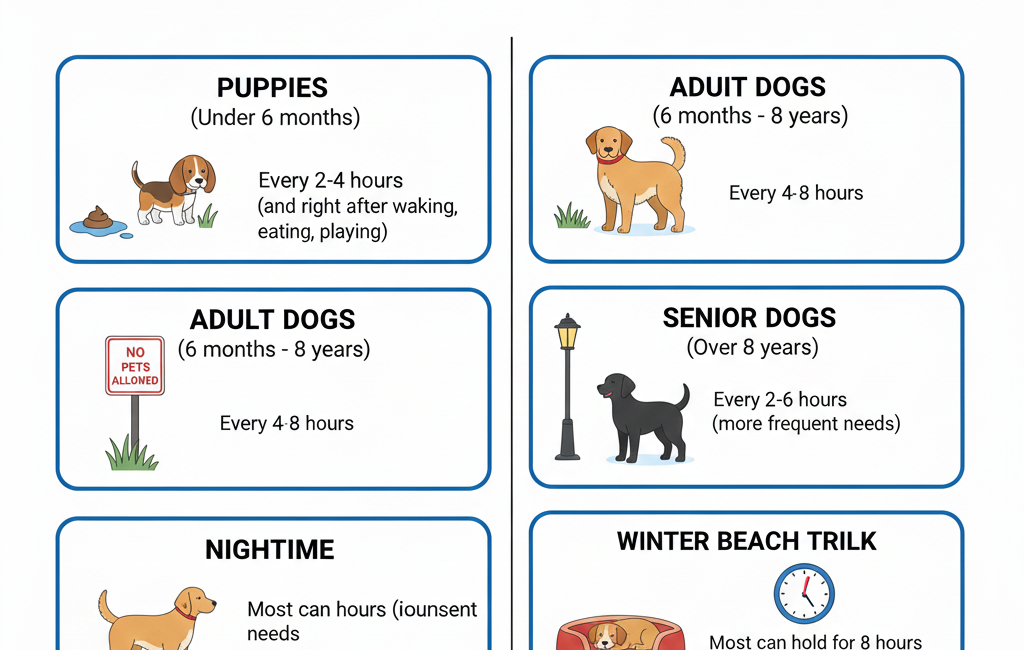
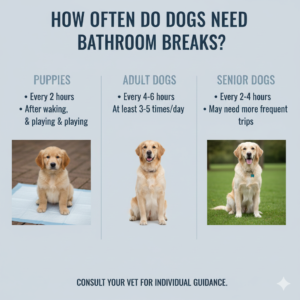
Little ones keep you on your toes with their quick needs. Vets these days suggest they can wait roughly an hour per month old, plus one. Like, a four-month pup tops out at five hours, but after chowing down or roughhousing, better make it every 30 minutes to an hour to stay dry inside.
From leading groups at Diggity Dog, I know small types like Shih Tzus zip through faster, calling for stricter puppy potty schedules. Build a pattern: upon waking, after eats, post-play, and pre-sleep. It’s a grind early on, but it pays off big with a sharp pup.
Handy Hints for Pup Success
- Load up on cheers and bites for good jobs it really clicks.
- Crates teach patience, but stick to age limits.
- Busy days? Phone reminders keep pet care steady.
Adult Dogs: Settling Into a Groove
Around one or two years, they ease up. They might hang on 6-8 hours, but I say don’t push past that to dodge any woes. Hanging with breeds like my pal’s Border Collie, every 4-6 hours seems spot-on for good moods.
Build matters huge hounds like Danes can linger, tiny ones not so much. Active pups? More fun means more drinks, more stops.
Everyday Flow for Grown-Ups
Kick off with a dawn walk, add a lunch one, dusk stroll, and bedtime quickie. Watch their hints; door hovering means now!
Senior Dogs: Easy Tweaks for the Old-Timers
The veterans need a softer touch. Past seven, stuff like stiff joints or internal changes mean more trips, say every 4-6 hours, maybe a late-night one. I’ve helped lots of wise old dogs via Diggity Dog, and things like mats or back doors make nights easier.
Vet trips regularly spot issues; maybe something like blood sugar ups the pace. Note their drinking extra gulps often spark more how often dogs pee wonders.
Other Stuff That Tweaks the Timing
Not just years; a bunch of extras play in. Let’s break down.
Breed and Build Variations
Teeny to towering: Small bladders in small dogs equal more dog bathroom breaks. A Pug could hit every four, a Labradoodle stretches to eight. We adjust tips at Diggity Dog per dog getting their size helps.
Eats, Drinks, and Routines
What they munch affects output. Soupy food means more liquid out, crunchy less so. I push for even-keel diets to steady healthy pet days. Steamy weather or chase games? Plan for bonuses.
Health Angles
Abrupt shifts? Could be a bug or worries. From vet talks for our site, catching early saves hassle. Pills might alter things check with pros.
Catching the Got to-Go Signals
Skip the signs, and it’s mop time. Whimpers, loops, door paws, or stares say go. One dog I knew learned to paw a chime changed everything.
Crafting a Plan That Suits You Both
Customize it! Note their ways a bit, then fit around meals, snoozes, and jaunts. Gadgets aid, but watching wins. Away a lot? Pals or pads cover.
Slip-Ups to Skip
Waiting forever? Mess waiting to happen. Rainy vibes? Indoor backups. Waffling schedules? Mixes up.
FAQs
Overnight waits for dogs?
Grown ones often snooze 8-10 hours okay, but babies or elders might nudge you awake.
Still messes with lots of breaks?
Vet check, maybe, or refresh basics could be jitters.
Females vs. males on frequency?
Nah, but spay/neuter tweaks hormones a tad.
Workouts and potty links?
Sure, more sweat means more sips, more goes. Weave into healthy pet life.
Cueing them to go?
Yep! Time and treats do it seen it fix rough patches.
References
- MasterClass: “How Often Should I Take My Dog Out? 3 Factors to Consider” (2022)
- GoodRx: “How Long Can Dogs Hold Their Pee? Here’s the Answer” (2024)
- uahpet: “How Often Should I Walk My Dog to Pee: A Comprehensive Guide” (2025)
- Oreate AI Blog: “How Long Can Dogs Go Without Peeing” (2026)
- PetSafe: “How Often Should You Let Your Dog Out to Pee” (2024)
- Pride and Groom: “How Long Can Dogs Hold Their Pee? Puppy vs. Adult Explained” (2025)
- Chewy: “How To Potty Train a Puppy” (2025)
- American Kennel Club: “Puppy Potty Training Timeline and Tips” (2025)
Wrapping up on dog bathroom breaks that’s my take from Diggity Dog. Fingers crossed it helps you and your buddy. Share your wins below; always fun to swap stories. Pop over to our page for more pet care nuggets and ways to keep a healthy pet.

Other Articles
Why Do Dogs Eat Grass?
8 Fun Winter Activities for Dogs

No Comment! Be the first one.