

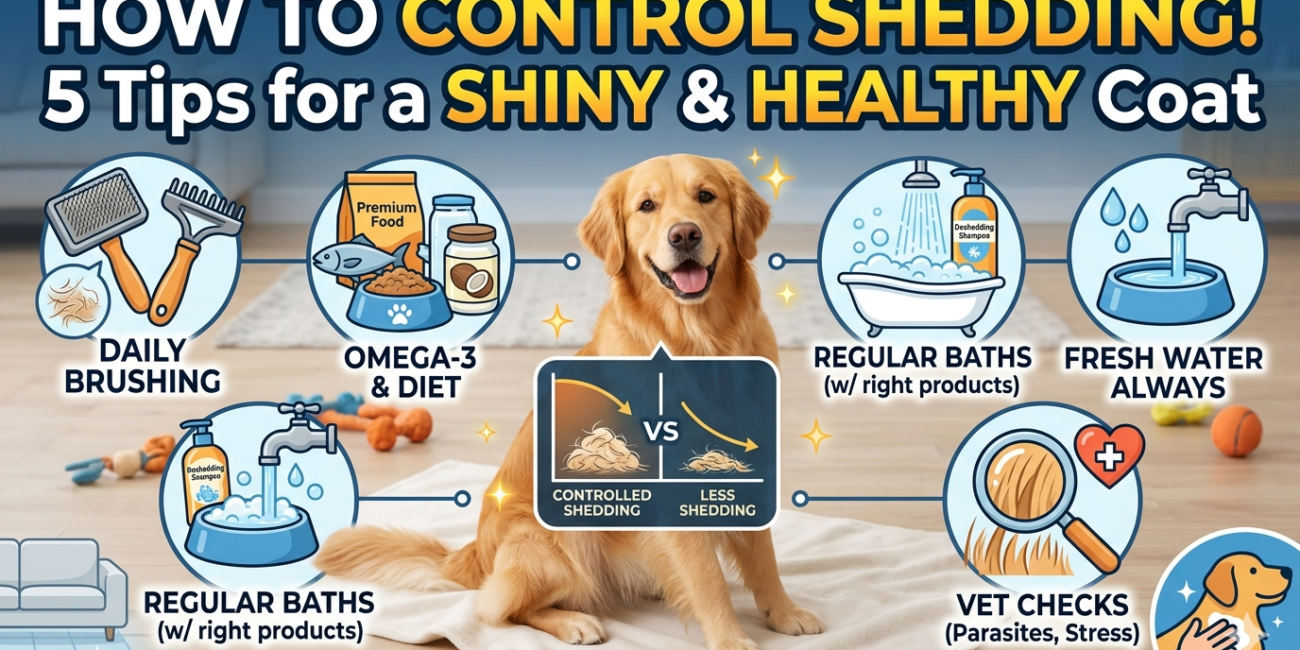
How to Control Shedding in Dogs: Tips to Keep Your Dog's Coat Healthy & Shiny
Shedding is a normal part of a dog’s life, but when your floors look like a fur factory and your furniture is covered in tumbleweeds of hair, it can feel overwhelming. The good news? You can dramatically reduce shedding and keep your dog’s coat shiny and healthy with a few simple, consistent habits. Most excessive shedding isn’t just “bad luck” — it’s often caused by diet, grooming routines, stress, or underlying health issues that you can address at home.
In this complete guide you’ll learn why dogs shed, the most common causes of excessive shedding, the best brushes and tools for every coat type, dietary changes that make a real difference, bathing schedules that actually help, and daily routines that keep your home cleaner and your dog happier. Whether you have a heavy-shedding breed like a Labrador or a light-shedding one like a Poodle, these practical tips will help you take control of the fur without spending a fortune or stressing your pup.
Why Dogs Shed: The Science Behind the Fur
Dogs shed for two main reasons: seasonal coat changes and the natural hair growth cycle. Most dogs blow their coat twice a year (spring and fall) to prepare for warmer or colder weather. On top of that, every hair has a growth phase, resting phase, and shedding phase. Some breeds (like Huskies or German Shepherds) shed heavily, while others (like Bulldogs or Poodles) shed minimally. Environmental factors — dry indoor air, poor diet, stress, or parasites — can make normal shedding look excessive.
The goal isn’t to stop shedding completely (that’s impossible and unhealthy). The goal is to manage it so your dog stays comfortable and your home stays livable.
Common Causes of Excessive Shedding
A diet low in omega-3 fatty acids, protein, or certain vitamins leads to dry, brittle hair that falls out more easily.
2. Seasonal & Hormonal ChangesSpring and fall blowouts are normal, but spayed/neutered dogs or those with thyroid issues can shed year-round.
3. Skin Conditions & AllergiesFleas, mites, food allergies, or environmental allergies cause itching and excessive shedding.
4. Stress or BoredomAnxious or under-stimulated dogs often over-groom or shed more due to stress hormones.
5. Medical IssuesThyroid disease, Cushing’s, or parasites can cause sudden heavy shedding.
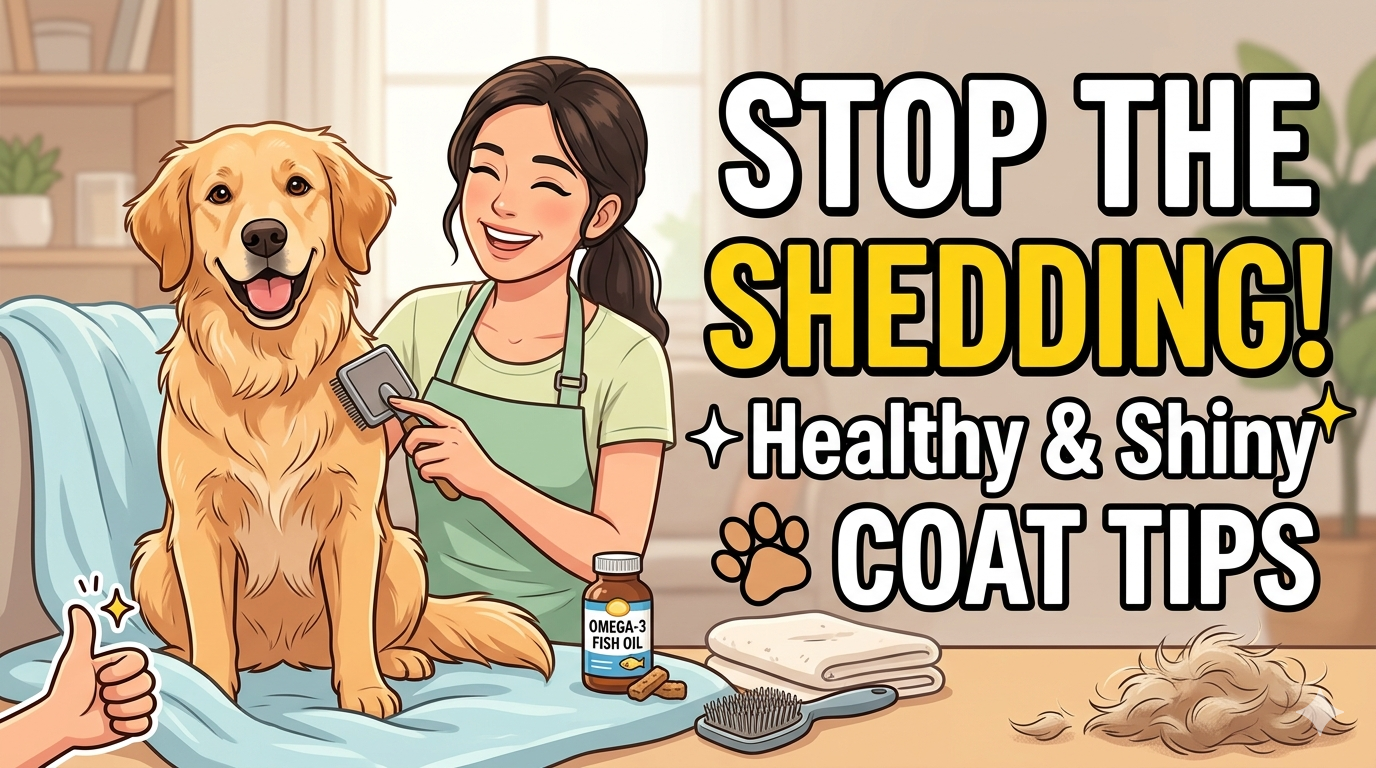
The Best Tools & Techniques for Controlling Shedding
Brushing is the single most effective way to control shedding. It removes loose hair before it falls on your floor and distributes natural oils for a shinier coat.
- Short-haired breeds: Rubber curry brush or grooming mitt
- Medium/long-haired: Slicker brush or undercoat rake
- Double-coated: Deshedding tool like Furminator (use gently)
Brush 2–3 times per week for most dogs, daily during heavy shedding seasons.
Diet Changes That Reduce Shedding
Coat health starts from the inside. Add these to your dog’s bowl:
- High-quality protein (animal-based, not plant-based fillers)
- Omega-3 fatty acids from fish oil or salmon oil (1,000–2,000 mg EPA/DHA daily)
- Zinc and biotin supplements (ask your vet for dosage)
- Probiotics for gut health (better nutrient absorption = better coat)
Many owners notice less shedding within 4–6 weeks of switching to a better diet or adding a fish oil supplement.
Bathing & Grooming Schedule
Over-bathing strips natural oils and can make shedding worse. Most dogs need a bath every 4–8 weeks. Use a gentle, oatmeal-based shampoo and always follow with a good conditioner or leave-in spray.
After bathing, thoroughly dry your dog (especially double-coated breeds) to prevent skin issues. A high-velocity dryer on low speed works wonders for removing loose undercoat.
Environmental & Lifestyle Tips
- Use a HEPA air purifier and vacuum regularly with a pet-hair attachment
- Keep humidity in your home between 40–60% (dry air worsens shedding)
- Provide mental stimulation to reduce stress-related shedding
- Regular exercise helps regulate hormones and circulation
When to See a Vet About Shedding
Excessive shedding accompanied by any of these needs a vet visit:
- Bald patches or thinning coat
- Red, inflamed, or scaly skin
- Constant scratching or licking
- Weight loss or changes in appetite
- Bad odor or unusual discharge from skin
A Shiny Coat and a Cleaner Home Are Possible
Controlling shedding isn’t about eliminating every hair — it’s about managing it so your dog stays comfortable and your home stays livable. By combining regular brushing, the right diet, proper bathing, and a few smart environmental changes, you can dramatically reduce loose fur and give your dog a healthier, shinier coat.
Start with one or two changes this week — a new brush, a fish oil supplement, or a better vacuum routine — and you’ll see results within a month. Your dog will thank you with fewer itches and more cuddles, and you’ll thank yourself every time you walk across a cleaner floor.
Want weekly shedding tips, grooming routines, coat health recipes, and more ways to keep your dog happy and healthy? Join the DiggityDog newsletter free — no spam, just tail-wagging advice delivered straight to you.
About the Author

J.V. CHARLES – DiggityDog
Dog mom, groomer, and founder of DiggityDog. Passionate about simple, effective at-home care routines that keep dogs healthy, happy, and shedding less — so you can spend more time enjoying life together.

Other Articles
How To Clean Dog Ears: At Home Edition



No Comment! Be the first one.