

Should You Play Tug of War With Your Puppy?
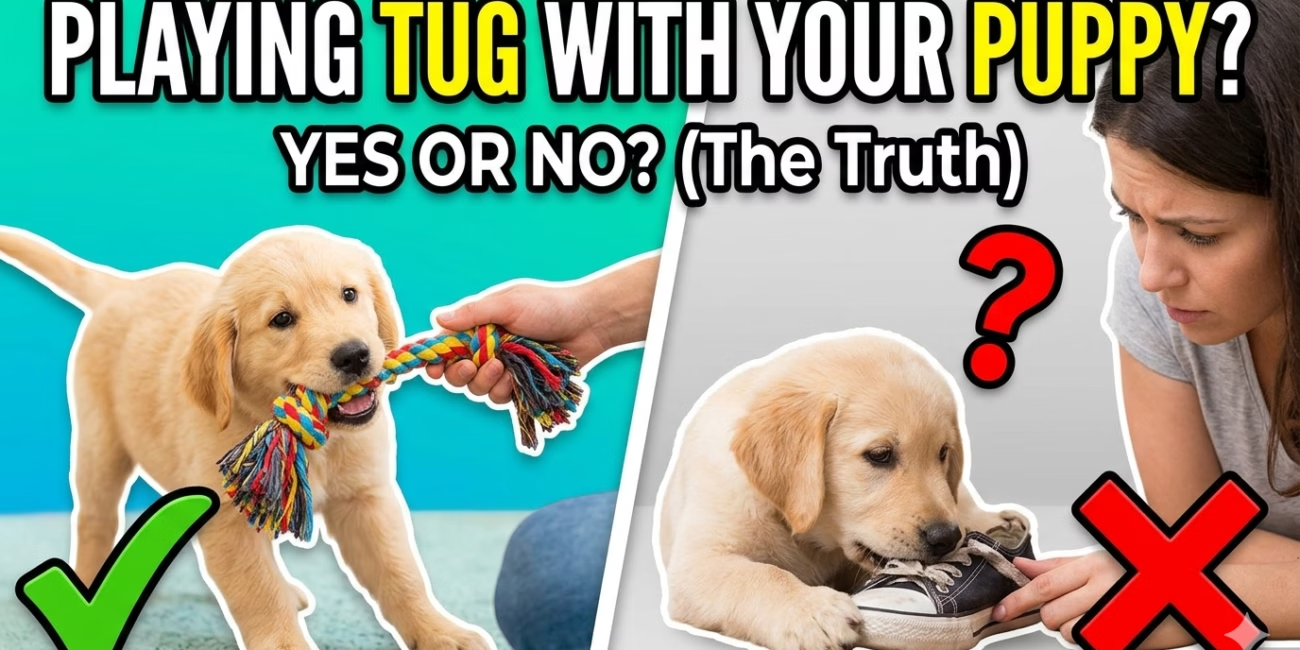
Your new puppy grabs the rope toy, gives you those big sparkling eyes, and starts pulling with all their might. Tug of war looks like the perfect game — fun, interactive, and a great way to burn off puppy energy. But then you remember all the old warnings: “Tug of war makes dogs aggressive!” or “Never let your puppy win!”
So… should you play tug with your puppy or not? The short answer is YES — but only if you do it the right way. Modern dog trainers and behaviorists agree that tug of war, when played correctly, is actually an excellent game for building confidence, teaching impulse control, strengthening your bond, and tiring out your pup mentally and physically.
Here’s the complete guide: when it’s safe, how to play it properly, and exactly what to avoid so tug of war becomes one of your best training tools instead of a problem.
The Truth: Tug of War Does NOT Make Dogs Aggressive
The old myth that tug of war creates aggression came from outdated dominance theory. Modern science shows the opposite: properly played tug of war actually reduces frustration and teaches dogs to control their impulses.
Studies from the University of Pennsylvania and other behavior labs found that dogs who regularly play tug with clear rules show better “drop it” compliance and lower overall aggression toward people and other dogs.
When Tug of War Is Perfect for Puppies
- Burning off zoomies and excess energy
- Teaching “drop it” and impulse control
- Building a strong handler-dog bond
- Improving confidence in shy or timid puppies
- Providing mental stimulation (they have to think and strategize)
The Golden Rules of Safe Tug of War
Hands are for petting, not tugging. Always use a rope toy or tug with handles.
2. Teach “Drop It” before you start playingPractice trading the toy for a treat first so your puppy learns that giving up the toy gets them something even better.
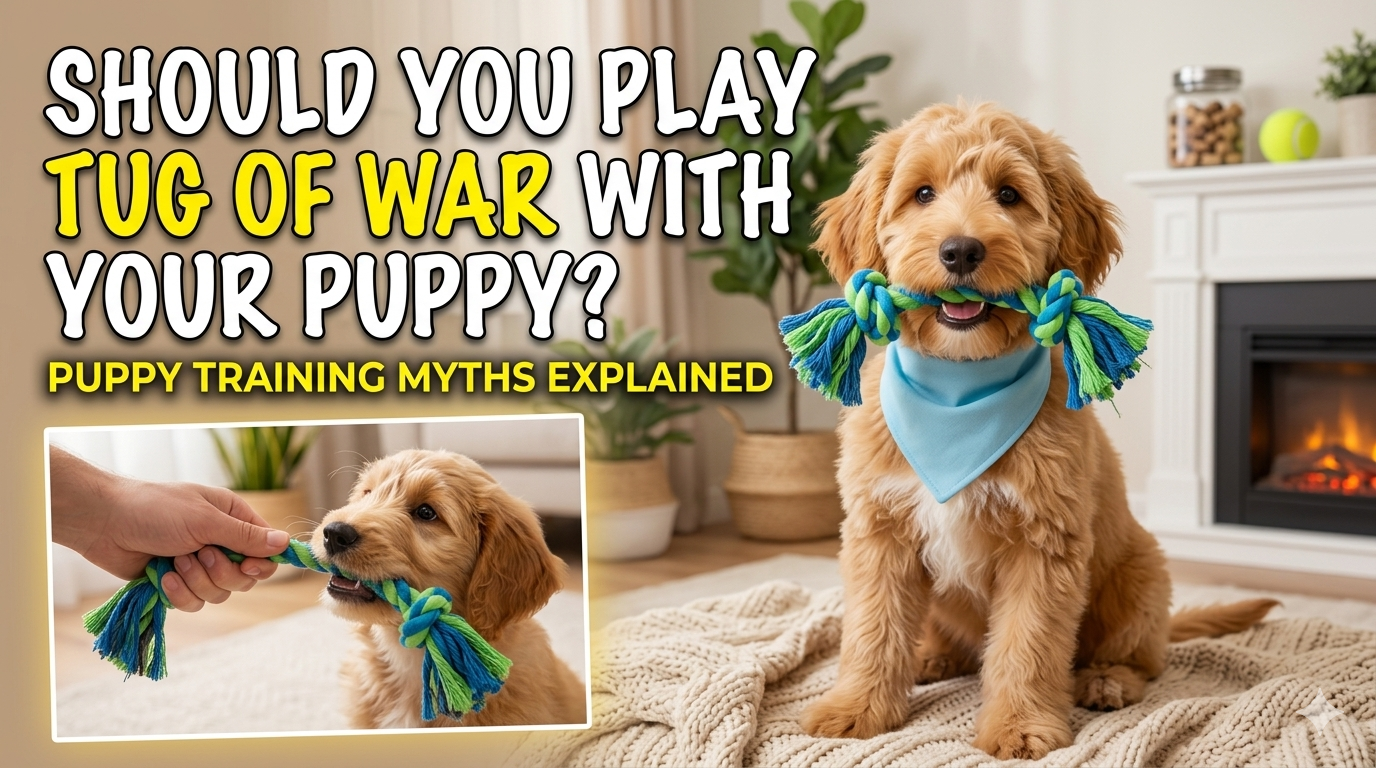
Winning builds confidence. Let them “win” the toy 50–70% of the time, then ask for a drop it and reward.
4. Stop immediately if things get too intenseIf your puppy starts growling, stiffening, or getting overly mouthy, calmly end the game and switch to a calmer activity.
5. Keep sessions short (2–5 minutes for puppies)Puppies tire quickly. Short, fun games are better than long ones that lead to overstimulation.
When You Should Skip Tug of War
Avoid tug if your puppy shows any of these signs:
- Resource guarding (growling or snapping when you approach the toy)
- Very mouthy or bitey behavior that doesn’t calm down
- History of fear or aggression issues
- Under 8 weeks old (too young for structured games)
In these cases, start with gentler games like fetch, hide-and-seek, or puzzle toys until you’ve worked with a trainer.
Step-by-Step: How to Play Tug the Right Way
- Choose a strong rope toy with handles
- Offer the toy and say “Take it!”
- Play gently — let them pull and win sometimes
- Say “Drop it” and trade for a high-value treat
- Reward the drop and end the game on a positive note
Repeat 3–5 times per session. Your puppy will quickly learn that giving up the toy is fun and rewarding.
Yes — Tug of War Is a Great Game When Done Right
Tug of war is not dangerous. It’s actually one of the best games you can play with your puppy when you follow the rules above. It builds trust, teaches self-control, burns energy, and creates a stronger bond between you and your dog.
Start slow, keep it fun, and always end on a good note. Your puppy will look forward to every session — and you’ll both have a blast.
Want weekly puppy training tips, enrichment games, and more fun ways to play with your dog? Join the DiggityDog newsletter free — no spam, just tail-wagging advice.
About the Author

J.V. CHARLES – DiggityDog
Dog mom, positive reinforcement trainer, and founder of DiggityDog. Obsessed with helping puppies grow into happy, well-behaved dogs through fun, force-free games like tug of war.

Other Articles




No Comment! Be the first one.