

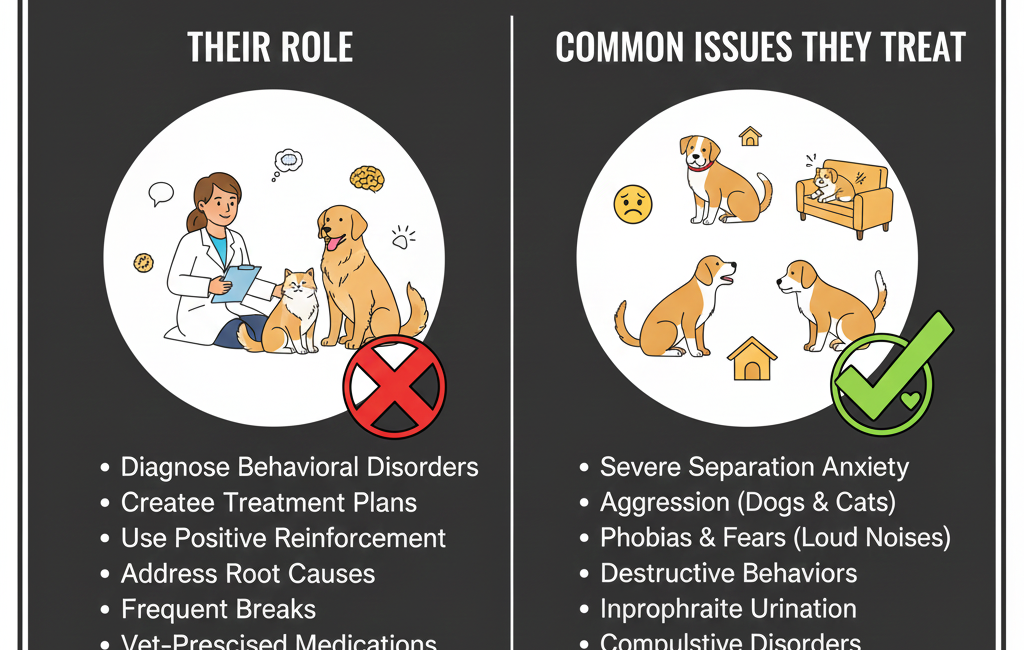
What Are Cat and Dog Veterinary Behaviorists?
I still remember the day my rescue shepherd, Max, lunged at the mailman so hard he nearly yanked my shoulder out of its socket. I was mortified. I loved that dog with every fiber of my being, but in that moment I didn’t recognize him. A regular trainer told me to “be the alpha.” Another said to just give him more exercise. Nothing worked. Then someone pointed me toward a cat and dog veterinary behaviorist, and honestly? It changed everything. Suddenly the snarling, the pacing, the destruction when I left the house it all made sense. That’s the magic these specialists bring to the table.
Hey, Joshua Van here founder of Diggity Dog and the guy who’s been knee-deep in pet care and healthy pet advice for the last ten years. I started this site because I was that clueless first-time dog dad who needed real answers, not just “rub some peanut butter on it and hope for the best.” If you’re here, you’re probably in the same boat: your dog’s suddenly resource-guarding the couch like it’s Fort Knox, or your cat has declared war on every piece of furniture you own. Let’s fix that together.
Why “Normal” Training Sometimes Isn’t Enough
Look, most dogs and cats are pretty easygoing. A little redirection, a clicker, and a pocket full of treats usually does the trick. But when the behavior feels extreme when your sweet girl growls over her food bowl for the first time at age eight, or your kitten is screaming bloody murder at 3 a.m. every single night that’s when you need more than a YouTube tutorial.
A cat and dog veterinary behaviorist is a veterinarian who went way, way further. After vet school they did years of extra residency, published research, and passed a brutal board exam just so they can figure out why your pet is losing their mind (and how to get it back).

What’s New in 2025 That Actually Matters
Pet ownership exploded after the pandemic, and so did behavior problems. Shelters are still seeing the ripple effects of all those lockdown puppies hitting adolescence. The cool part? We finally have tools that make getting help easier than ever:
- Real telehealth consults (yes, your dog can have a therapy session over Zoom)
- Collars that track heart-rate variability and flag stress before you even notice the whining
- Better meds with fewer side effects (think Prozac’s nicer cousin made just for pets)
So Who Are These People, Really?
They’re board-certified Diplomates of the American College of Veterinary Behaviorists DACVB after their name. There are only about 90 of them in the entire United States right now. That’s it. Fewer than the number of starting quarterbacks in the NFL, but they’re saving way more relationships.
They’re the ones who can tell you whether your dog’s aggression is pain-related (spoiler: it super often is), fear-based, or something medical like a wonky thyroid. They write the prescriptions when Prozac or Clomicalm is actually warranted, and they build the step-by-step plan so you’re not just doping your dog up and calling it a day.
The Problems They Fix Every Single Day
Dogs
- Lunging and barking on leash
- Separation anxiety that ends with chewed-up doors
- Suddenly snapping at kids or other dogs
- Resource guarding that’s gone from “cute” to scary
Cats
- Peeing on your laundry the day you bring the new baby home
- Attacking your ankles at 2 a.m.
- Hissing, swatting, or straight-up brawling with the other cat
- Hiding 23 hours a day and only emerging like a grumpy ghost
I’ve seen every single one of these in my inbox this year alone.
Why It’s Worth the Money (and the Waitlist)
Yes, the first appointment can run $300–$500. Yes, you might wait two months to get in. But here’s the math I always give people:
One boarded cat and dog veterinary behaviorist visit + actually following the plan vs. Three different trainers + new furniture + carpet cleaning + possible rehoming or euthanasia
Pick your hard.
In my experience and in the flood of reader emails I get most families see massive improvement in 4–12 weeks when they work with a real behaviorist. That’s not hype; that’s just what happens when the person treating the problem actually went to medical school for animals.
Key Takeaways (Save This Part)
- A cat and dog veterinary behaviorist is a vet who specialized in behavior they can diagnose medical causes and prescribe meds when needed.
- Start with your regular vet for a referral; they’ll know who’s good in your area.
- 2025 is the golden age of access telehealth and tech are making these experts reachable even if you live in the middle of nowhere.
- Early help is cheaper and kinder. Puppy and kitten “life skills” consults prevent 90% of the nightmares I hear about.
- If it feels wrong, trust your gut. You know your pet better than anyone.
FAQs – Straight From My Inbox
Q: How do I know it’s time to call one instead of another trainer?
A: If you’ve already tried reward-based training for a solid month and things are the same or worse call. Same if anyone is getting bitten or the behavior showed up suddenly in an adult pet.
Q: Are they just going to tell me to medicate my dog?
A: Nope. Meds are a tool, not the whole toolbox. Most plans are 70% management and training, 30% (or less) medication when it’s truly needed.
Q: Will pet insurance cover it?
A: Many plans now do Trupanion, Nationwide, and Healthy Paws are some of the big ones that reimburse behavior consults in 2025.
Q: What if I have both cats and dogs fighting?
A: That’s literally their favorite party trick. They live for multi-species chaos.
Final Thought From a Guy Who’s Been There
Your pet isn’t giving you a hard time. They’re having a hard time. A cat and dog veterinary behaviorist is the translator who finally lets them tell you what’s wrong and shows you exactly how to fix it together.
You’ve got this. And they’ve got your back.
Joshua Van Founder, Diggity Dog
P.S. If you’re on the fence, drop your story in the comments. I still read every single one, and I’ll point you toward help if I can.
References & Further Reading
- American College of Veterinary Behaviorists – dacvb.org
- 2025 ACVB Diplomate Directory & Referral Tool
- VCA Hospitals – “Introduction to Veterinary Behavior”
- Zoetis Petcare Behavior Resource Center
- Journal of Veterinary Behavior (2024–2025 issues)
- Fear Free Pets & Low Stress Handling certification resources

Other Articles






No Comment! Be the first one.