

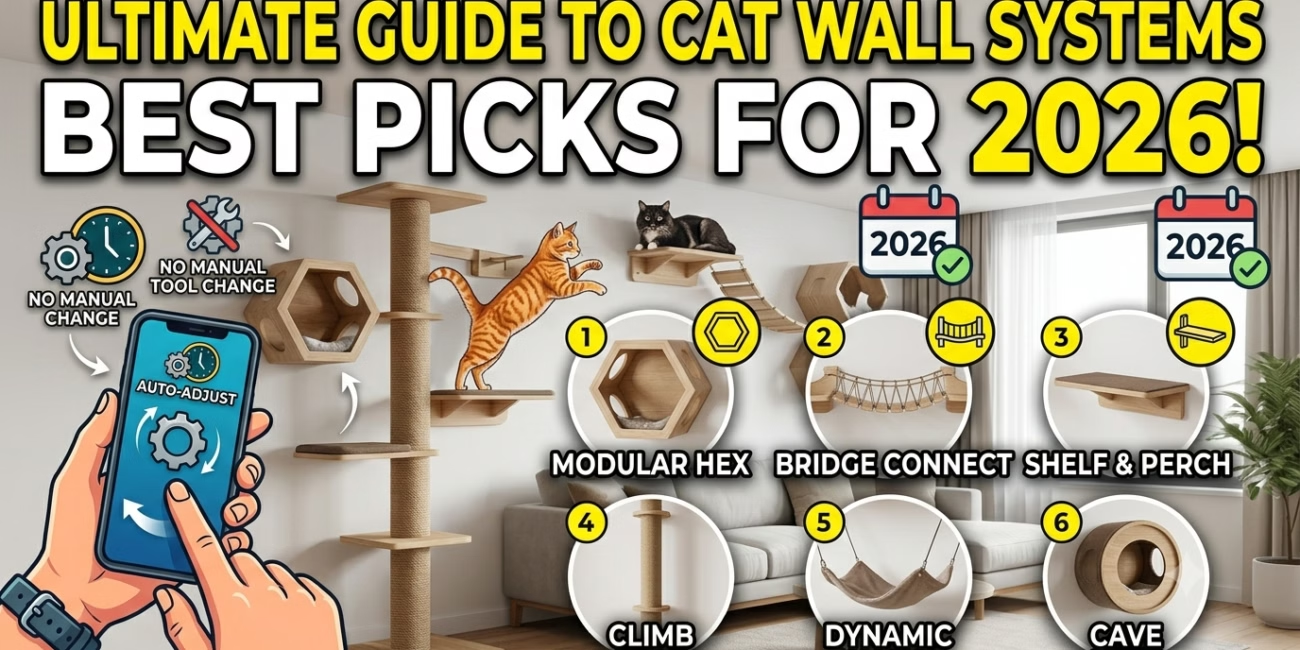
Ultimate Guide to Cat Wall Climbing Systems: Best Picks for 2026
In **2026**, environmental enrichment has taken center stage in modern indoor feline care. As urban living spaces shrink and cats remain exclusively indoors, building vertical territory is no longer a luxury—it is a behavioral necessity. Felines possess an evolutionary drive to seek high vantage points to monitor their environment, escape stressors, and express their natural jumping instincts.
Modern modular cat wall climbing systems have officially replaced the clunky, carpet-covered floor trees of the past. Today's structural options seamlessly blend architectural aesthetics with heavy-duty engineering. In this completely un-sponsored field guide, we break down the absolute best cat wall networks of the year, focusing on stability, longevity, and true behavioral design.
The Cat Wall Ecosystem Matrix: Comparing the Top Brands
A common pitfall when vertical mapping a room is failing to align the hardware with your cat’s size and activity level. Large, hyper-athletic breeds like Maine Coons or Bengals demand entirely different load capacities and anchoring frameworks than senior cats who need gentle, low-impact paths.
| System Brand & Model | Primary Material Suite | Max Weight Capacity | Core Target Demographic |
|---|---|---|---|
| Catastrophic Creations (Mod System) | Solid Bamboo & Heavy Canvas | 85 lbs per hammock element | Multi-cat spaces & heavy breeds |
| Fukumaru Modern Shelves | Solid Rubberwood & Jute Rope | 40 lbs per shelf segment | Budget-conscious minimalist setups |
| Tuft & Paw (Vista Suite) | Premium Birch Plywood & Felt | 50 lbs per integrated lounge | High-end interior design lovers |
| Omlet Freestyle System | Powder-Coated Steel & Bamboo | Unlimited (Floor-to-Ceiling tension) | Renters avoiding heavy wall drilling |

The Top Performers Reviewed: Which System Wins in 2026?
We evaluated the leading structural cat furniture on the market based on modular customizability, physical grip texture, and the security of their anchoring brackets. Here is how they stack up:
For household spaces managing large-scale, high-velocity feline zoomies, **Catastrophic Creations** remains the industry standard. Their updated modular framework relies on heavy-duty canvas components bracketed into solid bamboo pillars. Because the primary mounting brackets are precisely spaced to screw into standard American wall studs (16 inches apart), the system can effortlessly absorb the kinetic impact of a sprinting 20-pound cat without flexing or vibrating.
If you are desperate to give your pet vertical climbing space but are restricted by a rental lease that bans drilling dozens of massive toggle bolts into drywall, the **Omlet Freestyle** is an engineering marvel. It bypasses direct drywall mounting entirely, utilizing a heavy-duty, floor-to-ceiling tension pole. You can customize the central steel pole with adjustable platforms, sisal scratch bridges, and hanging hammocks that twist and lock into position along a 360-degree axis.
If you treat your home like a modern art gallery, **Tuft & Paw** delivers elite interior aesthetic design. Constructed with architectural-grade birch plywood, frosted acrylic portals, and clean, geometric lines, their shelves look like high-end floating art installations. Beyond looks, the platforms are lined with high-density, replaceable felt pads that offer premium traction for secure landings.
Structural Mapping: 3 Steps to Design a Safe Climbing Circuit
Buying the best hardware is only half the battle; you must mount the pieces into an intelligent behavioral configuration. Follow this layout blueprint to maximize your system’s utility:
- **Ensure a Dual-Escape Route:** Never build a cat climbing wall that terminates in a dead end. If you have a multi-cat household, an alpha cat can easily corner a submissive cat on a high shelf with no way down. Ensure your path flows in a continuous loop or offers at least two distinct descent vectors.
- **Calibrate Your Stride Angles:** Space your vertical climbing steps according to your cat's physical health. Healthy, young adult felines can comfortably navigate a 12-to-18-inch vertical rise between steps. For senior cats or flat-faced breeds with short legs, drop that increment down to a gentle 6-to-8-inch step distance.
- **Incorporate a High Destination Node:** The entire circuit should culminate in a deeply recessed "safe zone" platform or enclosed escape box placed near the highest point of the room. This serves as the ultimate observation lounge where your cat can sleep in peace, far removed from household foot traffic, vacuum cleaners, or dogs.
The Verdict: Prioritize Security Over Price
Investing in a high-quality vertical wall system transforms the psychology of an indoor cat, cutting down on behavioral anxiety, boredom scratching, and territorial tension. If you want a modular system built like an absolute tank, the heavy-duty canvas paths of **Catastrophic Creations** are unmatched. If you are balancing a rental agreement, let the tension-driven pillars of the **Omlet Freestyle** do the heavy lifting.
Map your room out thoughtfully, anchor your brackets securely into your studs, and give your cat the structural freedom to explore their world from above.
Want to see un-sponsored pet hardware teardowns and practical animal tech reviews? Subscribe to the DiggityDog Newsletter today for practical pet care toolkits, hardware teardowns, and design guides delivered straight to your inbox!

J.V. CHARLES – DiggityDog
J.V. Charles is a pet care specialist and dedicated pet advocate. He founded DiggityDog to bridge the gap between complex veterinary science and practical, everyday advice that empowers pet parents to live happier, healthier lives with their furry companions.



No Comment! Be the first one.